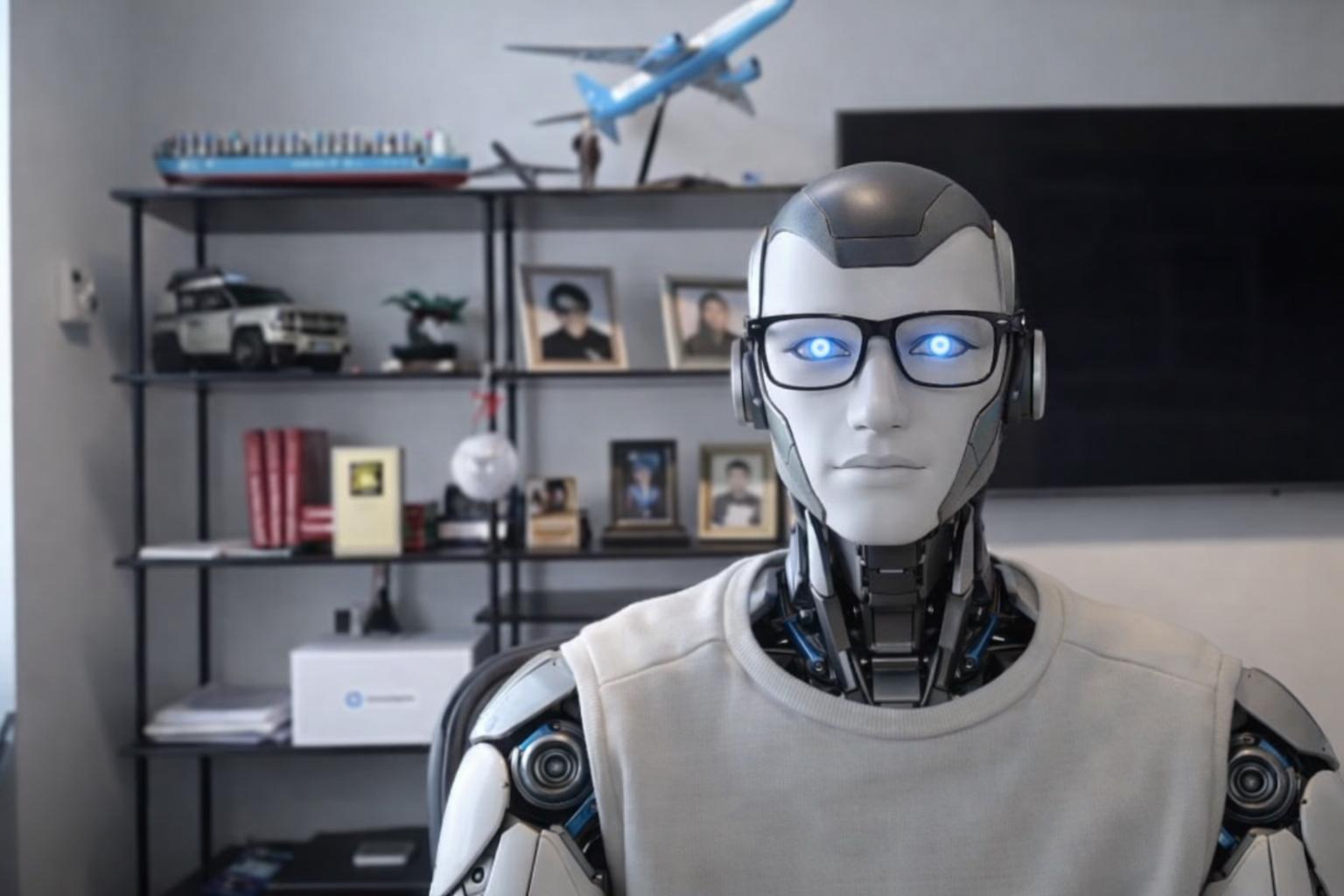
If AI is to do what we do - how many tokens it will take and what is the cost?
Most knowledge work is reading, replying, summarizing, and sitting in meetings. When you convert the average workday into AI tokens, the entire corporate hierarchy — from intern to CEO — costs less to replicate than your office coffee budget.
The entire communication output of a 500-person company costs less to replicate with AI than three mid-level salaries. Here's the math — and why it's actually good news.
Write down everything you did at work yesterday — what you actually did.
You read emails. You replied to emails. You sat in meetings where someone shared their screen and talked through a slide deck. You typed messages in Slack or Teams. You skimmed a spreadsheet. You wrote a few paragraphs in a document. You read more emails. You sat in another meeting. You replied to more messages. You went home.
Microsoft's 2025 Work Trend Index confirms what your calendar already screams: the average knowledge worker spends approximately 2.8 hours per day on email and 2.8 hours per day in meetings. That leaves roughly 2.4 hours for everything else — writing, analysis, thinking, creating — and even that time is shredded into confetti by the 275 interruptions per day that the same Microsoft research documented.
Let that sink in. An interruption every two minutes. The modern office isn't a place where thinking happens; it's a place where text gets shuffled between humans at an astonishing volume and an alarming pace.
Now here's a question worth turning over in your head: if roughly 88% of the workweek is spent reading and writing text — emails, reports, messages, meeting notes — and AI sells text processing by the million tokens at prices that have fallen 100–200x in three years... what does it actually cost to replicate that text work?
I did the math. The numbers are... illuminating.
A Quick Token Primer (For Humans)
Before we run the numbers, a brief translation guide. AI models don't think in words — they think in tokens, which are roughly three-quarters of a word. "The quarterly revenue report" is about 5 tokens. A typical email is 200–400 tokens. A one-hour meeting transcript runs 8,000–15,000 tokens.
AI providers charge per million tokens, with separate rates for input (what the AI reads) and output (what it writes). Think of it like a consultant who charges one rate to listen and another to talk — except this consultant charges in millionths of a dollar.
Here's what the pricing landscape looks like as of mid-2026, per million tokens:
For context: when GPT-4 launched in early 2023, input tokens cost $30 per million and output tokens $60 per million. Today's ultra-budget models like GPT-5-nano come in at $0.05 per million input tokens — a staggering 600x reduction in roughly three years (source: pricepertoken.com, silicondata.com). Even current frontier models like Claude Opus 4.7 at $5 input represent a 6x reduction from GPT-4's original pricing — while being vastly more capable.
The cost of machine cognition is falling faster than the cost of solar panels did — and we know how that story ended for coal.
The Corporate Ladder, Priced in Tokens
Let's build this from the ground up. Using data from cloudHQ's 2025 workplace email report, Fellow's meeting research, and Iternal.ai's token usage benchmarks, I estimated the daily token consumption required to replicate each role's communication and analysis workload.
The methodology is simple: count the emails, messages, meetings, and documents each level handles daily, convert everything to tokens (input for reading, output for writing), and multiply by current prices.
This isn't a prediction — it's a thought experiment. Here's the token payroll:
| Role | Daily Tokens (Input + Output) | Cost at Claude Sonnet 4.6 | Cost at GPT-5-mini | Cost at GPT-5-nano | Human Salary Equiv. (per day) |
|---|---|---|---|---|---|
| Intern / Junior IC | ~73K input + ~23K output | $0.56/day | $0.03/day | $0.01/day | ~$158/day ($41K/yr) |
| Mid-Level Manager | ~155K input + ~52K output | $1.25/day | $0.07/day | $0.03/day | ~$385/day ($100K/yr) |
| Senior Director / VP | ~218K input + ~72K output | $1.73/day | $0.10/day | $0.04/day | ~$770/day ($200K/yr) |
| C-Suite Executive | ~305K input + ~95K output | $2.29/day | $0.13/day | $0.06/day | ~$2,740/day ($712K/yr median, per Equilar 2025) |
Token breakdown: emails (read + reply), meetings (transcripts + summaries), Slack/Teams messages, document and spreadsheet work. See methodology note below.
The pattern that jumps out isn't any single role — it's the aggregate. Add up an entire 500-person company and the numbers get genuinely strange.
The entire communication output of a mid-level manager — every email, every meeting summary, every Slack reply, every spreadsheet analysis — costs about $1.25 a day to replicate at Claude Sonnet 4.6 prices. At ultra-budget GPT-5-nano prices, it costs three cents.
Scaling Up: The AI-Staffed Company
Individual roles are interesting. But what happens when you model an entire organization?
Consider a typical 500-person knowledge-work company. Using the role distribution from our table above — say 200 junior ICs, 150 mid-level managers, 100 senior directors, and 50 executives — the total daily token load to replicate all their communication and analysis work comes to roughly:
- Input tokens per day: ~75 million
- Output tokens per day: ~23 million
Here's what that costs across the current pricing spectrum — including both OpenAI and Anthropic models:
| Model Tier | Provider | Daily Cost | Annual Cost | vs. $45M Payroll |
|---|---|---|---|---|
| Claude Opus 4.7 (frontier reasoning) | Anthropic | ~$950/day | ~$247,000/yr | 0.55% of payroll |
| Claude Sonnet 4.6 (high-volume) | Anthropic | ~$570/day | ~$148,000/yr | 0.33% of payroll |
| Claude Sonnet 4.6 Batch (discounted) | Anthropic | ~$285/day | ~$74,000/yr | 0.16% of payroll |
| GPT-4o (workhorse) | OpenAI | ~$418/day | ~$109,000/yr | 0.24% of payroll |
| GPT-5-mini (mid-tier) | OpenAI | ~$32/day | ~$8,300/yr | 0.02% of payroll |
| GPT-5-nano (ultra-budget) | OpenAI | ~$13/day | ~$3,400/yr | 0.008% of payroll |
A 500-person company with a blended average salary of $90,000 spends $45 million per year on payroll. The token cost to replicate the text-based communication workload of every single employee ranges from 0.55% down to 0.008% of that payroll — depending on whether you want frontier reasoning from Claude Opus 4.7 or ultra-budget processing from GPT-5-nano.
Even at the most expensive option — Anthropic's flagship Opus 4.7 model, the one you'd use for genuinely complex reasoning — you're looking at a quarter of a million dollars to cover the text output of 500 people. That's less than the fully loaded cost of three mid-level employees.
Anthropic also offers batch processing at 50% off standard pricing ($1.50/$7.50 per MTok for Sonnet 4.6, $2.50/$12.50 for Opus 4.7), which makes the economics even more striking for non-real-time workloads like nightly report generation or batch email drafting.
For a real-world anchor: customer service is one of the first domains where this math has played out at scale. A typical Western customer service agent costs $30,000–$70,000 per year (which is precisely why companies offshore these roles to locations where the cost drops to $10,000–$20,000). Teneo.ai's 2025 analysis shows AI agents handling equivalent workloads for $12,500–$27,500 annually — competitive even with offshore pricing, and a fraction of onshore costs. Customer service is admittedly one of the more structured, repetitive domains. But the directional signal is worth paying attention to.
So What? Three Takeaways That Actually Matter
Let's step back from the spreadsheets. What do these numbers actually mean — for you, for your company, for the economy?
Takeaway 1: The Text Layer of Your Job Is Becoming a Commodity
This is the big, uncomfortable headline. The reading-writing-summarizing-replying layer of knowledge work — the stuff that eats 88% of your week — is rapidly approaching commodity pricing. Not in some distant future. Now. About a dollar a day for a manager's entire communication output isn't a forecast; it's a current price on a public API.
But — and this is crucial — commodity doesn't mean worthless. Electricity is a commodity. Nobody thinks power plants are pointless. What it means is that the text-shuffling itself stops being the valuable part. The thinking behind the text is what matters.
When the cost of producing text approaches zero, the value shifts entirely to what you decide the text should *say*. Judgment, taste, strategy, relationships — the things that can't be tokenized — become the entire game.
Takeaway 2: Roles Will Compress — And That's Where the Opportunity Lives
Here's where the conventional "AI will augment, not replace" narrative needs updating. The more honest picture is role compression: as AI absorbs the routine text tasks across a team, companies won't just hand people back their time with a smile. They'll expect each person to cover more ground.
We're already seeing this. The rise of "vibe coding" — where non-engineers use AI to build functional software — doesn't eliminate the engineer. It redefines the engineer. Suddenly you're not just writing code; you're thinking about product-market fit, user adoption, and go-to-market strategy. The boundaries between engineering, product management, and design are blurring because AI handles the mechanical parts of each.
The same compression is hitting marketing (strategist + copywriter + analyst become one role), finance (the analyst who also does narrative reporting and stakeholder communication), and customer success (where one person plus AI handles what used to take a team of five).
This isn't a dystopian story — it's an expansion story. The people who thrive will be the ones who embrace becoming multi-dimensional: part strategist, part operator, part AI orchestrator. The job description of 2028 will look nothing like 2024's, and that's genuinely exciting if you're someone who likes learning.
AI doesn't just automate tasks — it compresses roles. The engineer becomes a product thinker. The analyst becomes a strategist. The question isn't whether your job will change. It's whether you'll expand with it.
Takeaway 3: The Price Curve Hasn't Stopped
The 600x price drop over three years isn't some anomaly. It follows the same deflationary logic we've seen in computing, storage, and bandwidth — each of which, when they got cheap enough, reshaped entire industries in ways nobody fully predicted.
When bandwidth got cheap, we didn't just send the same number of emails faster — we invented YouTube, Netflix, and video conferencing. When storage got cheap, we didn't just store the same files more affordably — we invented Instagram, TikTok, and the entire cloud computing industry.
When cognitive processing gets cheap enough, we won't just automate existing text work. We'll invent entirely new categories of knowledge work that we can't yet imagine. The most interesting jobs of 2030 probably don't have names yet.
Step 1: Audit your week. What percentage of your work is text-in, text-out? Be honest — for most people it's 70–90%.
Step 2: Identify the judgment layer. Which decisions, relationships, and creative leaps behind that text are uniquely yours?
Step 3: Build the moat around the judgment, not the text. The person who writes the best emails isn't safe. The person who knows what the email should accomplish is.
Step 4: Learn to orchestrate AI. Prompting, chaining, reviewing, directing — this is the new literacy. Not optional. Not "nice to have." The equivalent of learning to use a spreadsheet in 1990.
The Bottom Line
The math in this article isn't meant to alarm you — it's meant to orient you. Yes, the text layer of knowledge work is being commoditized at breathtaking speed. But humans have been here before. We automated agriculture and got cities. We automated manufacturing and got the service economy. We automated calculation and got the information age.
Every time we automate the mechanical layer of work, we unlock the creative layer above it. The $1.25-per-day manager isn't a threat to managers — it's a liberation from the drudgery that eats their days. The person who used to spend five hours reading and replying to emails can now spend those hours thinking.
And thinking — real thinking, the kind that connects dots nobody else sees, that builds relationships AI can't, that makes judgment calls in ambiguous situations — has never been more valuable.
The text is becoming free. What you think is becoming priceless.
- Microsoft 2025 Work Trend Index �
- cloudHQ 2025 Workplace Email Report �
- Fellow Meeting Statistics 2025 �
- Iternal.ai Token Usage Benchmarks �
- Equilar 2025 CEO Compensation Study �
- Teneo.ai AI Agent Cost Analysis 2025 �
- PricePerToken.com — LLM Pricing Tracker �
- SiliconData — LLM Cost Per Token Analysis �
- Anthropic Model Pricing �
- OpenAI API Pricing �
Comments
Really great and thought provoking stuff. Keep writing and sharing.
Another set of sharp and somewhat provocative thoughts on what are in the AI cards. THANKS!
I believe this article would benefit from a follow up. Scenario planning. How would the behavior of this sample company change if AI can replace 10%/30%/60%/90% of the work.
Maybe if it s 10% the board would decide to reinvest the time in esg initiatives (with similar ROI).
Maybe if it s 50% the roles compress, but how does the daily life of the remaining employee look like, etc.
It would be a fun thought experiment